Death Doesn’t Erase Your Deeds
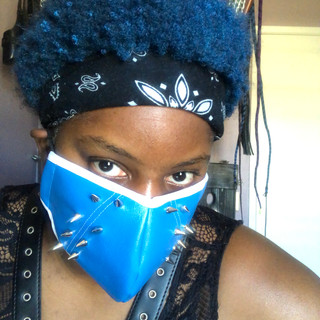
This is an Opinion Piece written by Ana Blue. Enjoy the ramblings of the Queen!
Trigger Warning: This piece will take about death...A LOT.
Death is inevitable.
It is one of the few things we all have in common.
Death will happen to us.
Death will affect us.
Death will haunt us.
Death will burn us.
Death will numb us.
No matter your religion, political affiliation, country of origin, whether you can have children or not, whether you are an athlete or not, whether you are married or single, monogamous or polygamous, rich or poor:
Death is the best detective because Death WILL find you.
But as powerful as Death is, there are still some spells even Death cannot cast.
Death will NOT erase your moments of being
-Abusive (Emotional, Mental, Spiritual, Physical, Psychological)-Coercive
-Ignorant
-Misogynistic
-Prejudice
-Racist
-Stubborn
-Unaccountable
-Unethical
-Unsupportive
-Violent
The community can be wonderful, but it is not perfect. This piece is not going to recite all the cons of the community but we will focus on two:
1)Forgiving an educator, author, titleholder, organizer, or other community celebrity of multiple grave injuries because of their role in the community.
2)Forgiving an educator, author, titleholder, organizer, or other community celebrity of multiple grave injuries because they have died.
This piece is not an attempt to persuade you to agree with all that I have written here.
I do implore you to THINK, PROCESS, and CONSIDER the points I have written.
Let’s get into it.
1)Forgiving an educator, author, titleholder, organizer, or other community celebrity of multiple grave injuries because of their role in the community.
Our community is plagued with the idea of “transgression non-acknowledgment mixed with reckless forgiveness” is the best policy when those in position of power or those whom we have placed on pedestals are accused of transgressions and guilty of transgressions.
It is tough when the situation arises and someone is facing an accusation because it almost raises more questions than answers:
-What did they do?
-Who are the actual perpetrators?
-Who are the actual victims/survivors?
-Who is telling the truth?
-Who are the judge and jury in the community who gets to say what happened or not?
If accusations are proven true,
-What punishment is fair?
-Are they stripped of their leather titles?
-Are they banned from teaching engagements?
Are they banned from events?
-How long do the punishments last?
-Geographically, how far out do the punishments reach?
How many educators, authors, titleholders, organizers, and other community celebrities do we know in the community that have committed EGREGIOUS actions and communities do not address the situation, ignoring the situation completely?
These perpetrators are forgiven or their transgressions forgotten because of their positive impacts on the community. They are seen as necessary to continue to provide valuable education and events despite the harm they have caused. Their negative, unethical behavior is brushed off because
-Oh, they wrote a book!
-Oh, they teach great classes!
-Oh, they have a House that has been around for years!
-Oh, they run events!
-But we have no one else but them to do the thing they are so good at! -etc.
This piece is not about NOT forgiving someone. This is specifically about repeat offenders, individuals who refuse to take accountability for the harm they have caused, who take advantage of vulnerable and marginalized people, and, most importantly, who use their status or position to violate the boundaries and consent of others.
At some point, we have to tell these “Pedestal Perpetrators” that we do not need them in our spaces anymore. New authors will arise. New teachers will come around. New events will pop up. How do we build these safer and brave spaces if we keep uplifting and awarding these “Pedestal Perpetrators?” We need to break this cycle.
2)Forgiving an educator, author, titleholder, organizer, or other community celebrity of multiple grave injuries because they have died.
That popular proverb “Do not talk ill of the dead” has a lot of negative silencing behind it.
If the person who died caused harm, why should their actions suddenly be erased and why should victims and survivors be expected to be remain silent about their experiences? Does Death somehow mean, “Knock! Knock! Come with me and all your sins are forgiven”? Should people stop sharing their traumatic experiences with this person just because the perpetrator passed away?
I see posts all the time of popular educators, authors, titleholders, organizers, or other community celebrities who have passed away and have done multiple, terrible things to people and these posts talk about how great they are and the strides they have made in the community.
What is troubling is when these tributes focus exclusively on their positive contributions while completely erasing the harm they caused. You can do both: acknowledge someone’s achievements while making space for those who experience something very different from them. A wise scholar in NorCal phrased it perfectly: “It’s almost like two different people died. The abuser, who is known by the abused, and the friend who is known by his friends. But only one of those is allowed to speak up after death. I respect grief. I don’t respect fandom. ”
Death does not erase what someone did while they were alive, nor does it erase the impact their actions had on others. Survivors should not be expected to suppress or deny their experiences simply because the person who harmed them has died.
Remembering someone’s life does not require us to erase the experiences of the people they hurt.
It makes me think about our country:
One of the reasons this country was started was because we did not want to be under the thumb of the English Crown, to have freedom of expression to work and worship how we please!
TTHHHEEENNNN….slavery
It makes me think about books:
In 1997, a book was published that brought people into an alternate dimension that awoken feelings of hope, friendship, family (or lack thereof), adventure, and making the impossible possible. The Harry Potter series helped a lot of people learn to read and get attracted to reading, to this day!
TTHHHEEENNNN….transphobia and misogyny.
It makes me think about our community:
We have so many people who teach wonderful classes, life changing books, leather title winners all over the globe, and events that have been going on for decades!
TTHHHEEENNNN….They do negative actions that add “perpetrator” to their resume.
In summary, when someone tells you of their negative experiences with a “Pedestal Perpetrator,” LISTEN!
Once you hear what they have to say, use your own judgement to decide if you want to continue to support either the accuser or the accused.
But telling someone, “Be quiet about your experiences. That person is dead, so it doesn't matter anymore. Get over it,” doesn't make the community safer. If anything, it can contribute to exactly why people become hesitant to participate in a community in the first place or why some people leave their community. How are people supposed to feel safe, respected, and welcomed when they see survivors being told that their experiences no longer matter?
Death does not erase deeds.
Forgiveness is not about forgetting.
We wish the dead “Rest in peace” but what about the peace of the survivors on this side of the grave? The death of their perpetrators does not end the suffering of the survivors, so let’s stop acting like it does.
Contributions:
1)Thank you to my Emotions Editor, Kastle. They help me calm down the tone of my writings...sometimes I listen haha!
2)Thank you to my Socratic Sparring Partner! They are one of my favorite strangers I have met on the internet that has become a great friend to discuss crazy ideas and recipes.


Comments